What’s Inside
- Why Traditional Marketing is Dead
- Climate Reality Shapes Consumer Behaviour
- Circular Models and New Metrics
- The Revolution Starts Here
Traditional marketing is dead. Sustainability, climate change, and AI are no longer “trends”: they are the tectonic plates shifting beneath business as usual. Brands that don’t adapt aren’t just irrelevant, they are extinct in slow motion.
***
I come home and my daughter runs towards me, her eyes shining. “Dad, my application has been accepted! They really liked my ideas and from today I’m an Eco-Warrior!” she exclaims, brimming with enthusiasm. She already has a long list of tasks in mind. Watching her determination, I smile: this is the kind of energy that changes things.
In just a few hours I’ll be teaching Marketing for Sustainable Growth. I wonder how my students will react when I explain that marketing today no longer sells products, it sells ideas, responsibility, and impact.
Why Traditional Marketing is Dead
For seventy years, marketing sold us the fantasy that happiness came shrink-wrapped in supermarkets. The formula was simple: more shelves, more sales, more growth.
That model is gone. You can’t A/B test your way out of planetary collapse.
We sold infinite growth on a finite planet. Now the bill has arrived: fires, floods, droughts, record-breaking heatwaves. The World Meteorological Organization confirmed that 2023 was around 1.45 °C warmer than pre-industrial levels (1850-1900), the hottest year on record. Independent datasets, such as Berkeley Earth, show similar findings (1.54 °C above 1850-1900).
Climate Reality Shapes Consumer Behaviour
Consumers are no longer asking politely. They’re voting with wallets—and fury.
- PwC’s Voice of the Consumer Survey 2024 found shoppers are willing to pay 9.7% more on average for products that are sustainably produced or sourced.
- 85% of people say they already experience the effects of climate change in their daily lives.
Sustainability is no longer a “nice to have”: it’s part of everyday decision-making.
This isn’t a “CSR talking point”. It’s survival strategy. Patagonia, for instance, transferred company ownership to an environmental trust in 2022, redefining “purpose”. That wasn’t branding, it was a business model rewritten around purpose.
Circular Models and New Metrics
The future isn’t linear. It’s circular, measured in loops, not volumes.
The EU’s Circular Economy Action Plan is explicit: recycle more, waste less, cut dependency on finite resources. Companies are racing to prove they’re serious—tracking emissions per campaign (ISO 14064), filing ESG disclosures (GRI Standards), or aligning with the UN’s Sustainable Development Goals.
But here’s the kicker: metrics don’t move people. Stories do. No customer has ever tweeted “great GRI compliance, congrats!”. What they notice is whether your brand feels like part of the solution—or part of the smoke.
The Revolution Starts Here
The train of sustainability has left the station, and spoiler: it’s not coming back for you.
As I close my laptop, my daughter sketches her Eco-Warrior action plan in bright colours. She’s already designing posters, drafting slogans, plotting change. And I realise: the real revolution doesn’t look like a keynote or a quarterly report. It looks like this—determination, ideas, and the refusal to accept that the old rules still apply.
Traditional marketing is dead. The obituary is written in carbon. The future belongs to those who can turn survival into a strategy.
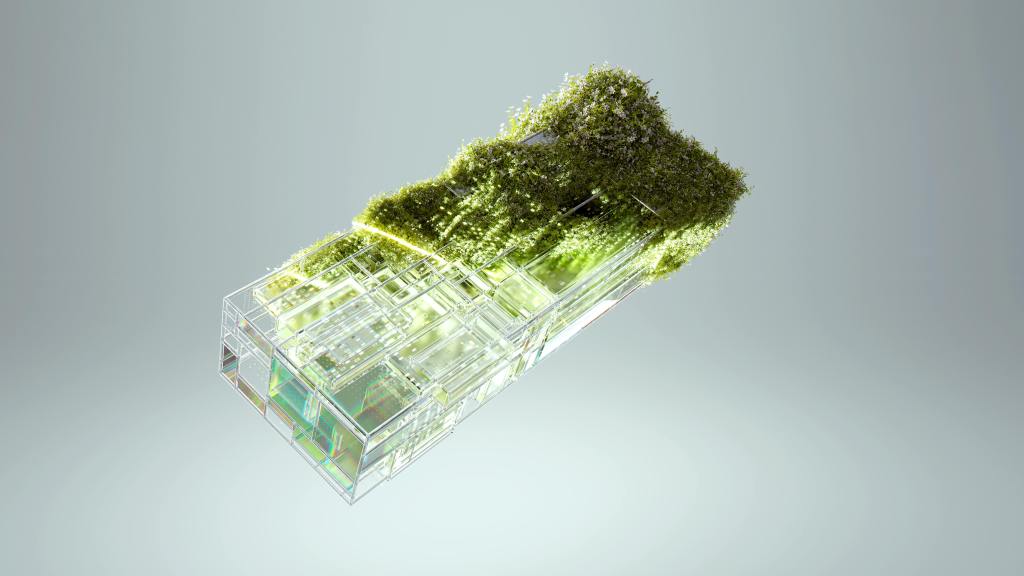
Cover image: Google DeepMind
 Oliver* - * People For Impact